The network behind the nation’s digital horizon.
Qatar 5G operates as the connective tissue for the nation’s smart infrastructure, linking transport, energy, and public services into a unified digital ecosystem. We treat latency not as a metric, but as a design principle: every millisecond saved translates to safer roads, more responsive healthcare, and seamless media experiences for a country that moves at the speed of ambition.
Our origin story is tied to the 2022 World Cup, where near-zero latency enabled real-time AR overlays for global broadcasts—a proof point for national readiness. That moment wasn’t an endpoint; it was the baseline. The ‘Vision 2030’ mandate treats connectivity as a utility, not a luxury, and 5G is the invisible scaffolding for that future.
“We don’t sell bandwidth. We sell the time that bandwidth saves.”
Engineered for the desert’s edge
The Physics of Reliability
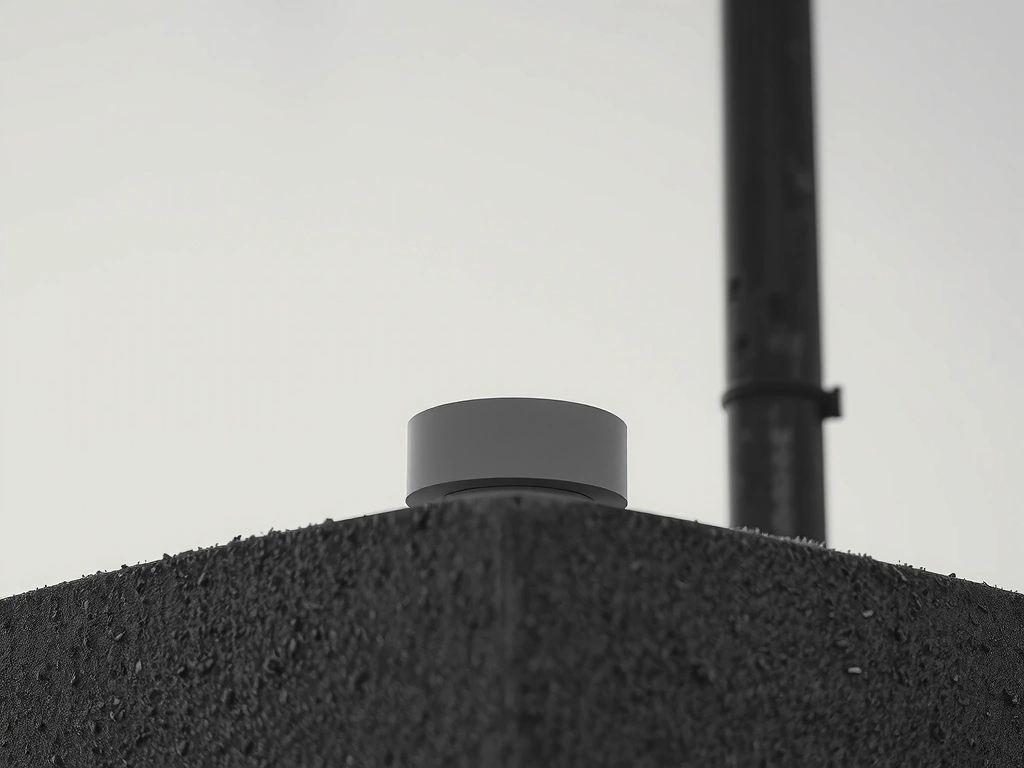
Sandstorms are a design constraint, not an excuse. Our antennas are sealed with hydrophobic coatings and calibrated for particulate interference, maintaining signal integrity even when visibility drops. It’s a hard-won resilience.
Constraint Note: Power consumption is the silent budget. Each node is optimized for energy efficiency, with solar-assisted units in remote areas reducing grid dependency. A network is only as strong as its weakest environmental day.
- Backhaul Congestion: Dual-path fiber redundancy ensures failover in under 50ms.
- Node Misalignment: Automated alignment checks via GPS triangulation every 4 hours.
- Spectrum Collision: Dynamic slicing isolates public and emergency traffic physically.
Coverage That Reads the City
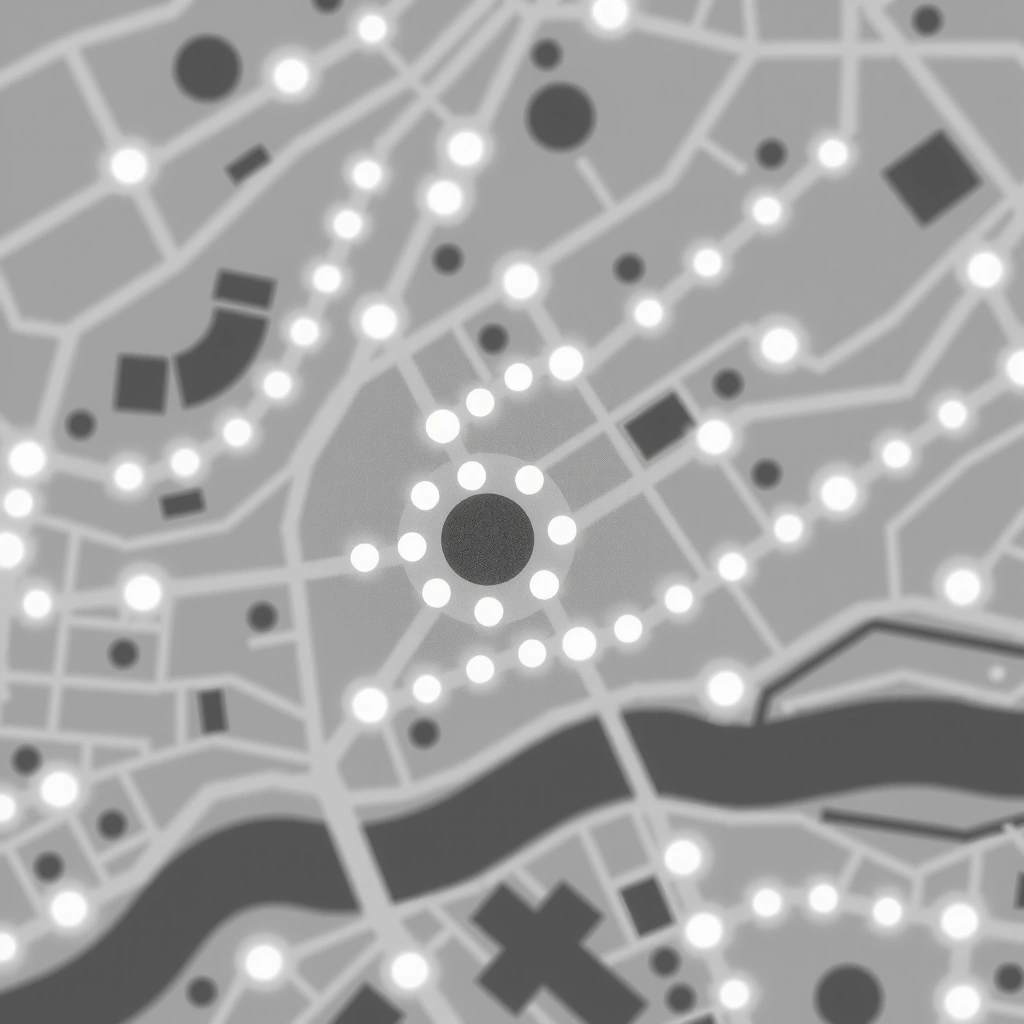
We map signal against Qatar’s unique density patterns: high-capacity nodes at the Corniche and Lusail, stadium-dense zones, and industrial corridors. The network is designed for ‘vertical coverage’—elevators, metro lines, and underground parking remain connected.
Deployment Criteria
Static Towers.
We use micro-nodes that can be repositioned seasonally, adapting to shifting population flows.
Partners in the Signal
The network is not a monolith—it’s a platform. From the Ministry of Public Health’s remote diagnostics to Education City’s low-latency VR training, the infrastructure serves as an invisible partner in every screen, every sensor, every signal.
High-res imaging from rural clinics to central hospitals.
Vehicle-to-infrastructure comms for autonomous pilots.
Open access for developers testing latency-sensitive applications without heavy upfront cost.
“We are the invisible partner in every screen, every sensor, every signal.”
Method Note: Evaluating Robustness
We measure reliability not by peak theoretical speeds, but by performance under load and stress. Our evaluation involves stress-testing nodes in controlled chambers simulating Qatar’s summer conditions (50°C+ with particulate matter). Latency is measured via continuous ICMP ping batches (100 packets/sec, 64-byte payload) across 24-hour cycles to identify micro-drops. Backhaul availability is a binary gate—if fiber isn’t redundant, the node doesn’t go live.
What Changes Our Mind
- A new spectrum auction that shifts cost-per-mHz dynamics.
- Concrete attenuation studies from Lusail high-rises.
- Regulatory approval timelines shifting by >3 months.
Trade-Off Matrix
| Decision | Primary Constraint |
|---|---|
| mmWave vs. Mid-band | Wall penetration |
| Small Cell Density | Aesthetics & permits |
| Spectrum Cost | Service quality budget |
Reliability is a Series of Choices
Robustness isn’t a feature you buy; it’s a discipline you maintain. In Qatar’s environment, the network is designed to perform on the weakest day, not the best theoretical hour. This means accepting constraints—heat, sand, spectrum cost—and engineering around them, not through them.
Tomorrow’s Network, Today
The next phase is ‘network-as-sensor’—using existing infrastructure to monitor air quality, traffic flow, and crowd density without additional hardware. Edge computing nodes are being deployed at key sites, moving processing closer to the user to enable real-time AI applications like instant translation. The network is designed for 6G readiness: modular hardware that can be upgraded without full replacement.
“A farmer uses 5G-connected drones to monitor crop health, receiving data overlays in real-time. The signal doesn’t just connect devices; it augments intuition.”
Principles
- Resilience Over Peak
- Latency as Design
- Vertical Coverage
Hours
Mon-Thu: 08:00–17:00
Fri: 08:00–12:00